Taylor Simmons · 16 September 2026
Enterprise Virtualization Strategies Evolving After Infrastructure Consolidation Waves
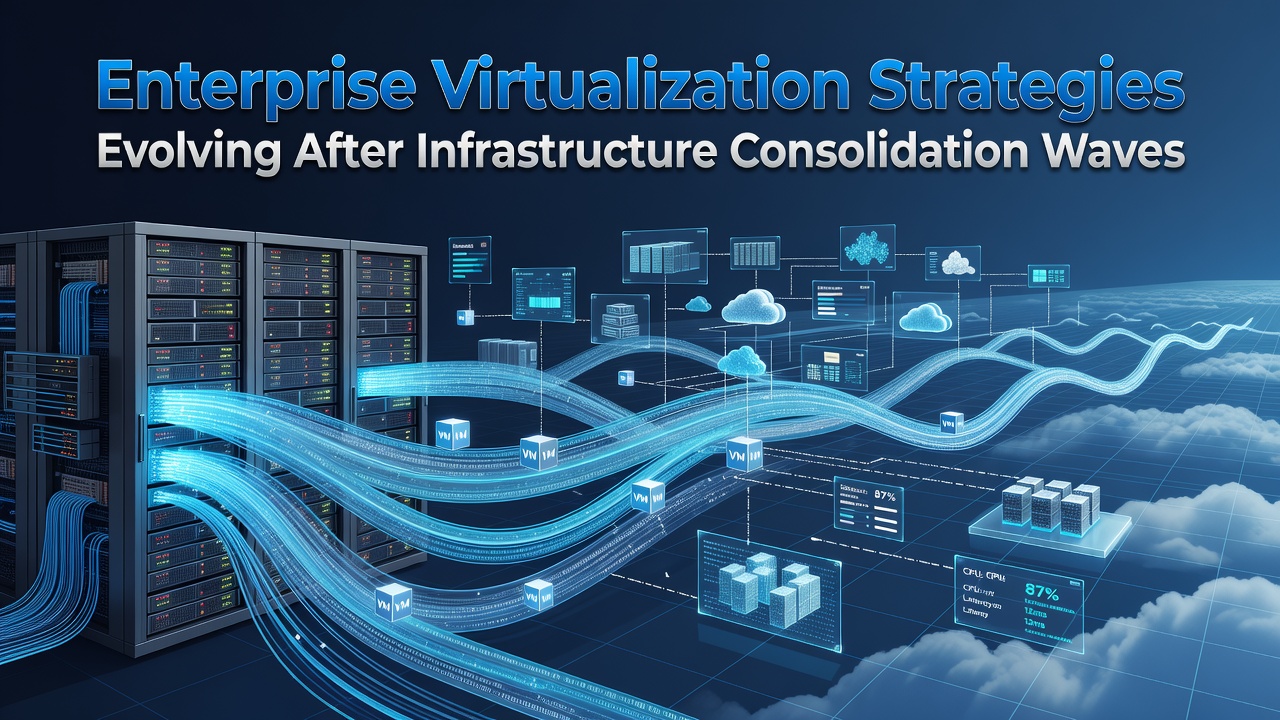
Enterprise infrastructure consolidation has reshaped how organizations manage physical resources over the past decade, and virtualization strategies continue to adapt in response to those shifts. Companies first merged separate data centers and server fleets into unified platforms, which reduced hardware footprints while increasing demands on software-defined layers. Researchers at academic institutions have tracked these changes through longitudinal studies that compare pre-consolidation and post-consolidation environments across multiple industries.
Historical Drivers of Consolidation
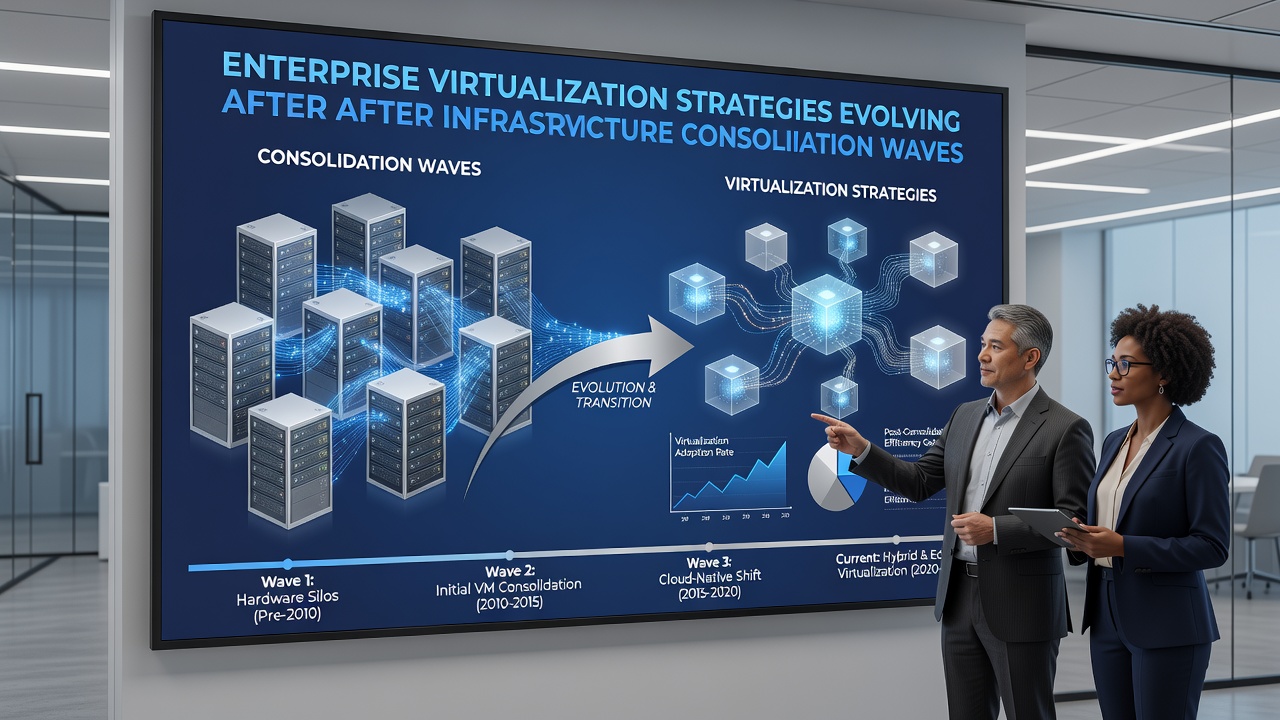
Consolidation waves accelerated after organizations faced rising energy costs and maintenance burdens from distributed physical servers. Data from government technology assessments in Australia shows that many large enterprises reduced physical server counts by more than half between 2018 and 2023. Those reductions created denser workloads that required more sophisticated virtualization tools to maintain performance and isolation. Observers note that hypervisor platforms such as KVM and VMware vSphere became central because they allowed administrators to allocate CPU, memory, and storage across fewer physical hosts without service interruptions.
Shifts in Virtualization Approaches by September 2026
By September 2026, virtualization strategies had moved beyond simple virtual machine density toward hybrid models that combine traditional VMs with container orchestration and bare-metal options. Figures released by the European Union Agency for Cybersecurity indicate that over 65 percent of surveyed enterprises now run mixed environments where containers handle stateless applications while VMs retain stateful databases. This combination emerged because consolidation left limited rack space, forcing teams to maximize utilization rates without compromising security boundaries. Administrators discovered that orchestration layers could schedule workloads dynamically across both VM and container runtimes, which reduced idle capacity that consolidation had previously masked.
Integration with Broader IT Ecosystems
Consolidation also pushed virtualization teams to align more closely with network and storage virtualization. Software-defined networking overlays now operate directly on the same hypervisors that manage compute, allowing policy enforcement at the virtual switch level rather than through separate appliances. Studies from Canadian research universities document that organizations adopting this integrated approach cut network latency by measurable percentages in production workloads. Storage virtualization followed a similar path, with distributed file systems providing thin provisioning that matches the variable demands created by consolidated server fleets.
Security and Compliance Considerations
Security requirements evolved alongside these technical changes. Consolidated environments concentrate risk on fewer physical systems, so virtualization strategies now incorporate micro-segmentation and attested boot processes as standard features. Reports from the National Institute of Standards and Technology outline recommended controls for hypervisor hardening that many enterprises have implemented since consolidation peaks. Those controls address both guest isolation and the management plane, because attackers who compromise a consolidated host can affect multiple workloads simultaneously.
Operational Practices and Automation
Automation has become essential for managing the complexity that follows consolidation. Infrastructure-as-code tools now define virtual machine templates, container images, and network policies in version-controlled repositories. Teams that adopted these practices report faster provisioning times and fewer configuration drift incidents, according to industry benchmark collections. Yet the shift also requires new skill sets, because staff must understand both legacy virtualization commands and modern declarative syntax used by orchestration platforms.
Conclusion
Enterprise virtualization continues to respond to the constraints and opportunities created by earlier infrastructure consolidation. Organizations track utilization metrics, security posture, and automation coverage to refine their approaches as hardware platforms and workload patterns change. Data from multiple regions shows that the combination of VMs, containers, and software-defined infrastructure remains the prevailing model for enterprises seeking efficiency after consolidation has occurred.