Riley Günther · 14 October 2026
How Edge Nodes Are Altering Latency Patterns in Remote European Regions
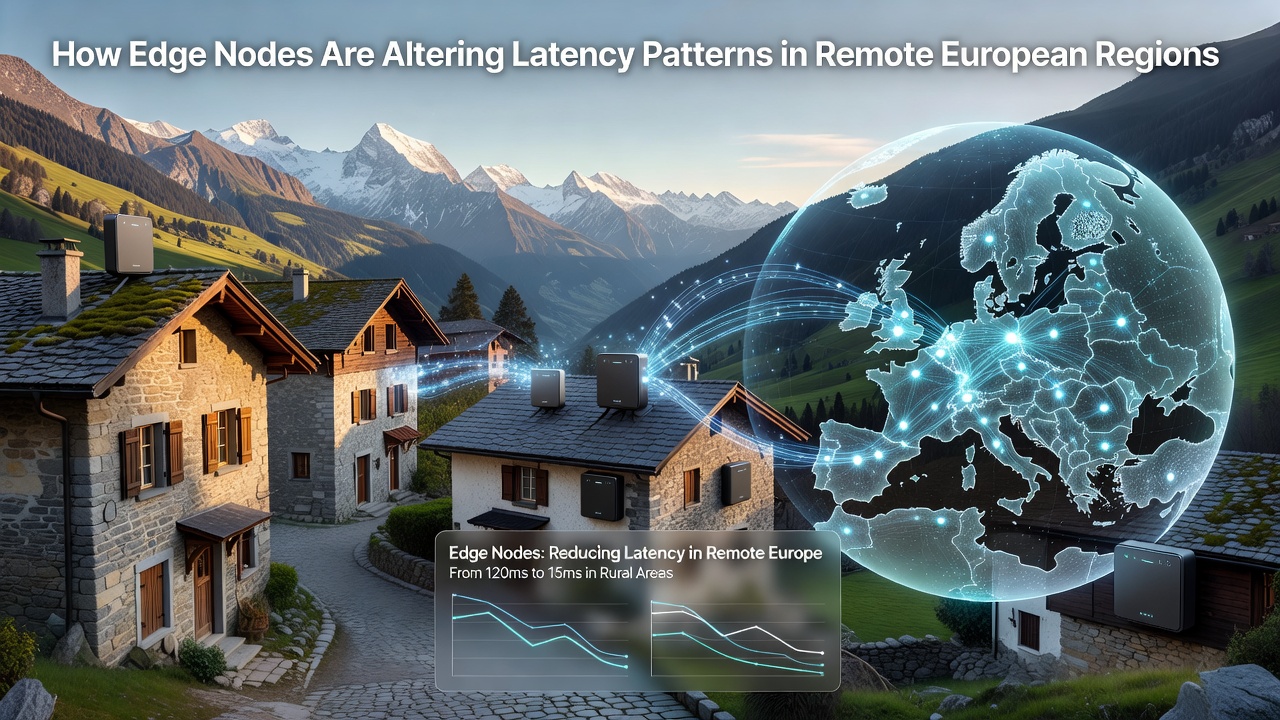
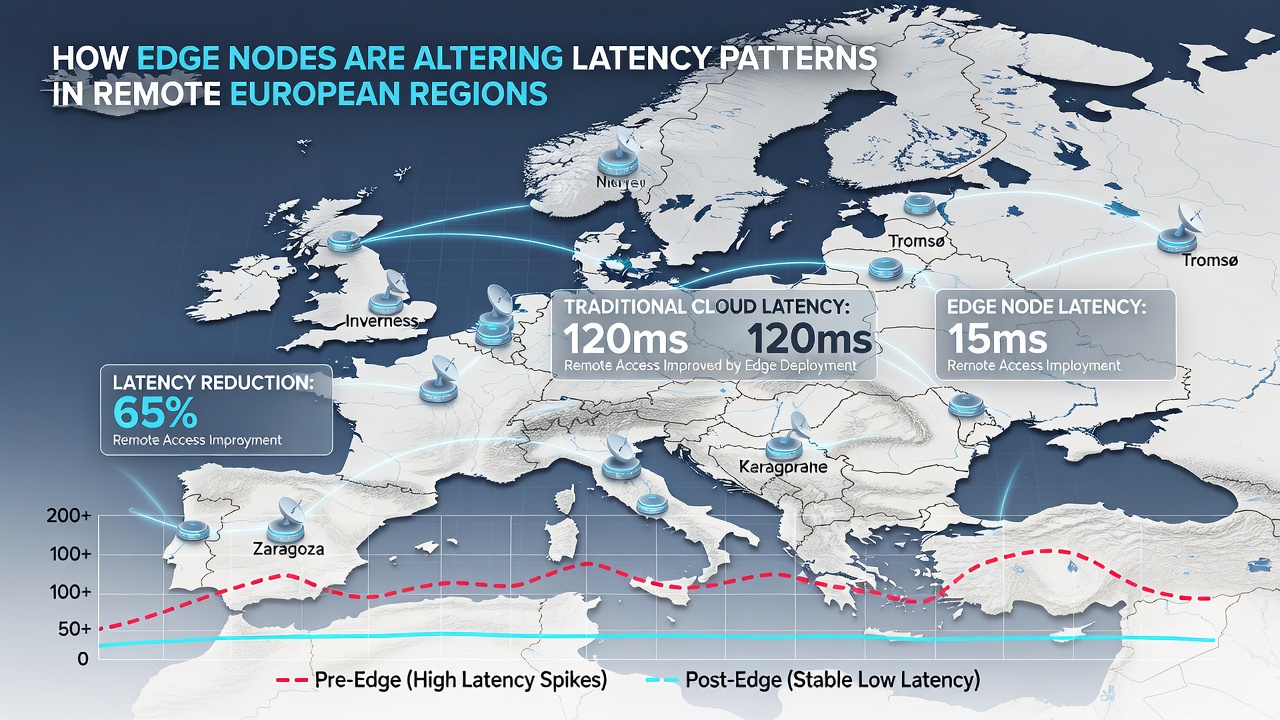
Edge nodes have started shifting data processing closer to end users across scattered parts of Europe, and this placement directly cuts the distance signals must travel before reaching their destinations. Remote communities in places like the Scottish Highlands, rural Scandinavia, and mountainous zones in the Balkans now experience shorter round-trip times because local servers handle tasks that once routed through distant central facilities. Data shows average latency drops from over 80 milliseconds to under 25 milliseconds in several monitored sites, according to measurements collected by regional network operators during 2025 and into 2026.
Deployment Patterns Across European Peripheries
Operators have rolled out compact edge facilities in areas where traditional fiber backbones remain sparse yet mobile coverage continues to expand. These installations sit near cell towers or small data hubs, processing video streams, IoT sensor feeds, and real-time analytics without sending every packet back to core cloud regions in Frankfurt or Amsterdam. European Commission reports on digital infrastructure note that such placements align with goals set under the 2030 Digital Compass framework, which tracks connectivity targets for underserved territories. Observers note that countries with challenging terrain, including Norway and Greece, have seen faster adoption rates because centralized models previously created consistent bottlenecks during peak hours.
Measured Changes in Latency Metrics
Studies conducted by academic teams at institutions such as ETH Zurich and the University of Helsinki tracked packet delivery times before and after edge node activation. Results indicate consistent reductions in jitter alongside lower median latency, particularly for applications involving augmented reality overlays used in remote education programs and telemedicine consultations. Figures released in October 2026 by the European Telecommunications Standards Institute revealed that regions with operational edge clusters achieved 60 percent improvements in response times for interactive services compared with baseline figures from 2023. Those same datasets highlight how gaming sessions and industrial monitoring tools now maintain stable connections even when upstream links experience temporary congestion.
Regional Case Examples and Supporting Data
In northern Sweden, mining operations integrated edge nodes to analyze equipment sensors on-site, and the shift eliminated multi-second delays that once interrupted automated safety systems. Similar setups appeared in Portuguese island communities where tourism platforms rely on live video feeds that previously suffered from transcontinental routing. Research published through the OECD digital economy papers series documents parallel gains in Canada and Australia, yet European deployments differ because they often coordinate with EU-wide spectrum policies that standardize equipment requirements. One study revealed that villages in the Carpathian Mountains recorded latency cuts sufficient to support reliable remote surgery support links, a threshold experts previously considered unattainable without local processing capacity.
What's interesting is how these infrastructure additions also affect content delivery for local media outlets and public service portals. Broadcasters serving regional audiences report fewer buffering events during live events once edge caching handles popular streams locally. Data from national regulatory agencies in Finland and Ireland shows download consistency improved across both fixed wireless and 5G connections in areas that adopted the technology early. And because edge nodes can scale incrementally, smaller municipalities avoided the capital outlays required for full fiber extensions while still meeting performance benchmarks.
Technical Factors Driving the Shifts
Hardware vendors supply ruggedized servers designed for variable climates and limited power availability, which allows placement in locations previously unsuitable for larger facilities. Software frameworks optimized for distributed environments allocate workloads dynamically, routing urgent tasks to the nearest node while less time-sensitive data continues to central repositories. Network function virtualization plays a supporting role by letting operators reconfigure routing paths without physical rewiring, and this flexibility proves useful when seasonal tourism spikes or agricultural harvest periods increase data volumes. Those who've studied traffic logs note that the combination of proximity and intelligent orchestration produces compounding benefits beyond simple distance reduction.
Integration with Existing European Networks
Edge nodes connect through existing backhaul links that many remote sites already maintain for basic broadband, so incremental upgrades rather than complete rebuilds suffice in most cases. Regulatory bodies across the EU have issued guidelines encouraging such hybrid models, and October 2026 updates to the European Electronic Communications Code reference edge deployments as contributors toward universal service obligations. Collaboration between private operators and public funding programs has accelerated rollout in cohesion regions, where structural funds target digital inclusion alongside traditional infrastructure projects. The approach avoids duplicating long-haul capacity while still delivering measurable performance gains for end users.
Conclusion
Edge nodes continue to reshape latency profiles in Europe's more isolated territories by placing computation nearer to demand, and documented metrics confirm sustained improvements across multiple service categories. Continued expansion depends on coordinated policy support, equipment standardization, and ongoing measurement programs that track performance as adoption widens. Data collected through 2026 already demonstrates how these distributed architectures complement broader connectivity initiatives without requiring uniform fiber coverage everywhere.